
Around 3.8 million people in the UK haven’t been told how to use their inhalers correctly, according to research.
A survey by charity Asthma + LUNG UK found that around 70% (3.8 million) of the UK’s 5.4m asthma sufferers don’t get the most basic elements of care, including being shown how to get the most out of their inhalers.
As well as asthma sufferers, millions more use inhalers for conditions such as COPD and other chronic lung diseases.
This lack of education is thought to contribute to the four people who die a day from asthma in the UK. Many of these deaths are deemed avoidable.
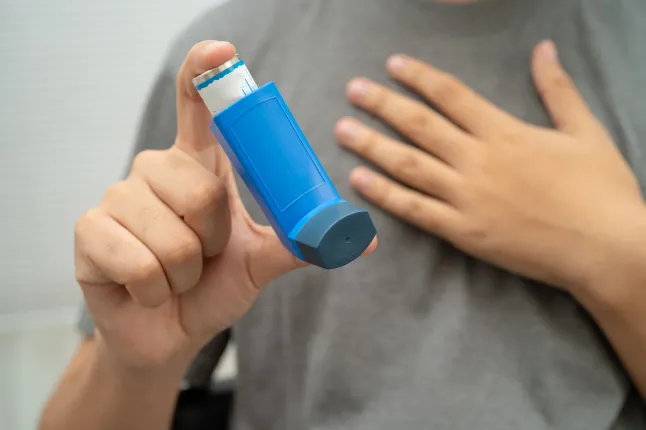
Inhaler
The findings, and continued issues around inhaler use, have prompted the UK Inhaler Group (UKIG) to issue a new guide to better educate people on how to use the life-saving devices more effectively.
In a bid to promote the guide, Dr Katherine Hickman, a GP and respiratory specialist, shared some tips for ensuring they are used correctly.
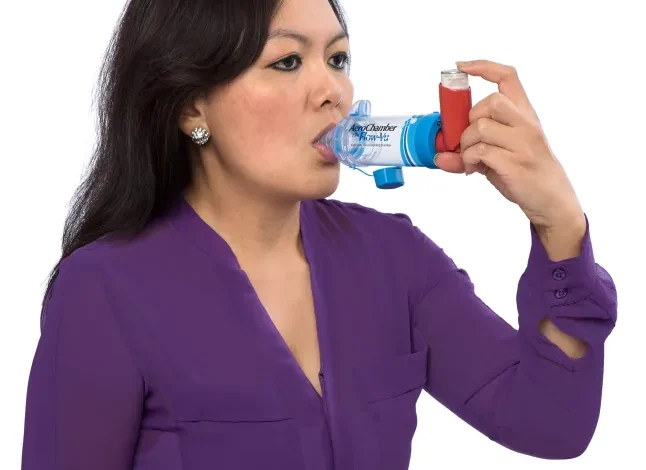
Check if you should use a spacer
The NHS says that spacers are ‘more effective’ at delivering medication to people using pressurised metered-dose inhalers (pMDIs). These account for around 70% of inhalers in the UK. Spacers hold the medication after it leaves the inhaler, making it easier to inhale.
For pMDI users, a study published in the European Respiratory Journal found that not using a spacer can result in as little as half the intended dose being delivered.
‘Spacer devices play a critical role in asthma care, mitigating technique, coordination and throat deposition issues, which we know impact both adults and children,’ Dr Hickman said.
‘We need to spread the message about spacer use as far and wide as possible.’
Spacers are not suitable for all types of inhalers. For instance, dry powder inhalers (DPIs) and breath-actuated inhalers (BAIs) do not require a spacer, according to Asthma + Lung UK. Therefore, you should consult your GP or pharmacist to see if a spacer is suitable.
Shake the inhaler
It is important to shake your inhaler well before every use so the medication is mixed properly and each puff delivers the correct dose, Liam Clutterbuck, from Trudell Medical UK, explained.
Failing to do this can mean the medicine is not evenly distributed, making it less effective.
The NHS recommends waiting around 30 to 60 seconds between puffs and shaking the inhaler each time to help ensure you receive the correct dose.
Inhale slowly and deeply
Exhale fully first, then inhale in a steady, calm breath over 3 to 5 seconds, rather than taking a fast, sharp breath, Liam said.
Having a slow, steady breath gives the medicine more time to travel deep into your lungs, where it is needed, rather than being deposited in your mouth or throat.
Asthma + Lung UK also recommends holding your breath for around five to 10 seconds after inhaling the medication, where possible, to give the medicine time to settle in the airways.
Ensure a tight seal
You should form an airtight seal around the mouthpiece or facemask so no medication can escape, Liam said.
A poor seal can allow medicine to leak out, reducing the amount that reaches your airways and making the inhaler less effective.


I drew my own opinion of the office wearing these parasites or in your fate and
I love it when individuals get together and share opinions.
Great blog, continue the good work!
Thank you so much @ Get started, I appreciate
Weird!!!