
Home

Transforming Knowledge into Empowering
Journeys
EVOLUTION!!!
As there’s a connectivity between pleasure and failure, so do we believe that retrogression will always be the abode of those retarded with respect to knowledge, because knowledge is the price to be paid to achieving exploit
At Zika Williams we are keen to updating you with educational insight on tech, precise intuition on the Financial market , and keeping you up to speed with interesting and positive facets of developments that will broaden your horizon as you explore your pursuits






EXPLORE AMAZING STORIES AND TUTORIALS ON OUR E-LEARNING PLATFORM

QUICK READ:
Which is really worst for your health, smoking, vaping or nicotine pouches?
Cigarettes, vapes and nicotine pouches all deliver the same addictive drug, nicotine, but they do so in very different ways — and people can be pretty territorial about their method of choice.
Some smokers are wary of the long-term effects of vaping, seeing it as a case of better the devil you know, whereas e-cigarette and pouch loyals often defend their habit with ‘at least it’s not a cigarette’.
But which is actually worst for your health?
As Dr Rayyan Zafar tells Metro, none of these options are benign, so ‘if you do not use nicotine, do not start.’
vaping
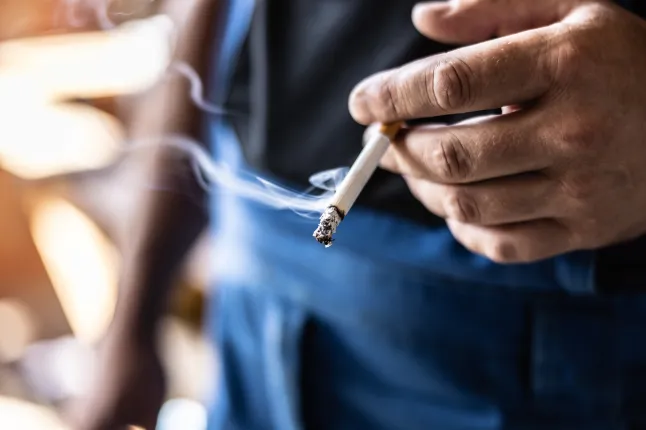
However, the Imperial College neuropsychopharmacologist and senior researcher at Drug Science says there’s a clear answer as to what does the most harm: ‘Cigarettes, by a very large margin.’

Smoking is linked to a huge range of serious health problems, including lung cancer and cancers of the mouth, throat, larynx, oesophagus, pancreas, bladder and kidney.
It also dramatically increases the risk of coronary heart disease, heart attack, stroke and peripheral vascular disease, while being a major cause of chronic obstructive pulmonary disease (COPD), chronic bronchitis and emphysema.
According to Dr Zafar, the majority of these issues ‘are caused by inhaling the toxic chemicals produced when tobacco burns, rather than by nicotine itself.’
How harmful is vaping?
This certainly doesn’t mean vaping is harmless.
As vapes don’t burn tobacco, users are exposed to ‘substantially lower concentrations’ of many of the chemicals associated with cancer, respiratory illness and cardiovascular disease found in cigarette smoke.
But the vapour they create may contain fine particles, metals, aldehydes and flavouring-related chemicals that irritate or inflame the airways, causing common side effects like coughing, dry mouth, sore throat, headaches and nausea.
And what about nicotine pouches?
Then there’s tobacco-free nicotine pouches, which Dr Zafar says ‘may be the least harmful’ of the three since there’s no carbon monoxide and combustion involved.
While studies suggest they’re likely to be substantially less harmful than cigarettes though, he highlights that because these products are relatively new, research is limited in terms of long-term regular use.
Pouches also come with their own unique side effects, including gum irritation, dry mouth, ulcers and white lesions where the pouch is placed, nausea, hiccups, headaches and an increased heart rate or blood pressure.
There’s also a risk of nicotine poisoning if swallowed, while the fact they deliver as much or more nicotine than a cigarette (albeit usually more slowly) has the potential to lead to a similar level of dependence.
‘Nicotine pouches should not be used by children, pregnant people or adults who do not already use nicotine,’ explains Dr Zafar. ‘I am particularly concerned about marketing which encourages users to start low… this needs to be urgently looked at.’
The verdict
In terms of least to most harmful, Dr Zafar’s broad ranking goes: No nicotine use or licensed nicotine-replacement therapy, tobacco-free nicotine pouches or regulated vapes, snus (pouches which contain tobacco), cigarettes.
However, he says that the precise order in the middle is uncertain and can depend on the particular product, nicotine dose and pattern of use.
For a smoker who switches completely to a regulated vape or tobacco-free pouch, this is likely to represent a substantial reduction in harm. For a child or an adult who has never smoked, starting to vape or use pouches provides no health benefit and introduces a risk of dependence.
‘Dual use is another important issue. Somebody who vapes or uses pouches but continues to smoke may retain much more smoking-related risk than they realise. The greatest health benefit comes from switching completely.’
Essentially — and to reiterate — ‘being free from both tobacco and nicotine carries the lowest risk’. If you already smoke cigarettes though, moving entirely to either non-combustible product is vastly better for you.